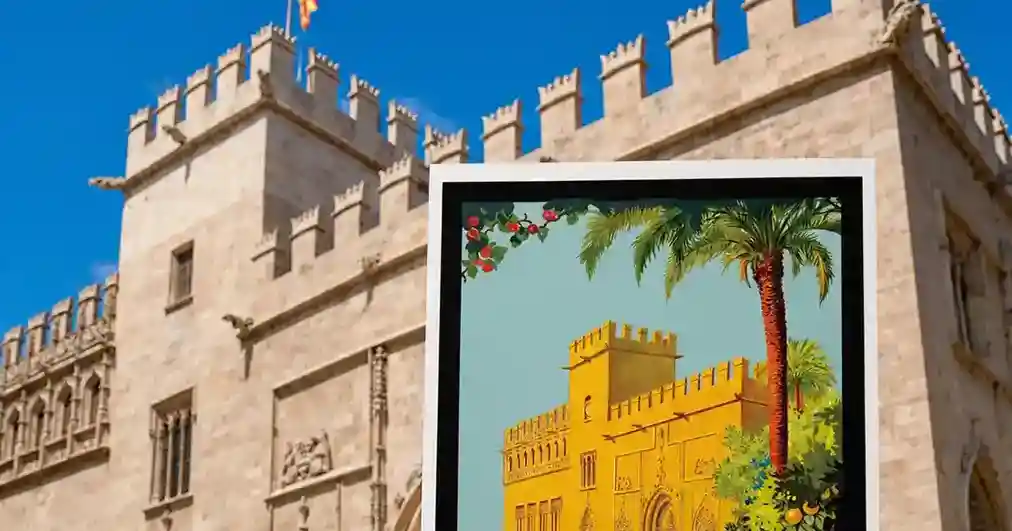
Discover the fascinating history of the Lonja de la Seda Valencia, from silk merchants and Mediterranean trade to its surprising medieval prison.
If you walk through Valencia’s historic centre, you will eventually come across a building that looks as though someone has dropped a medieval castle into the middle of a busy Mediterranean city.
This is the Lonja de la Seda, Valencia’s famous Silk Exchange.
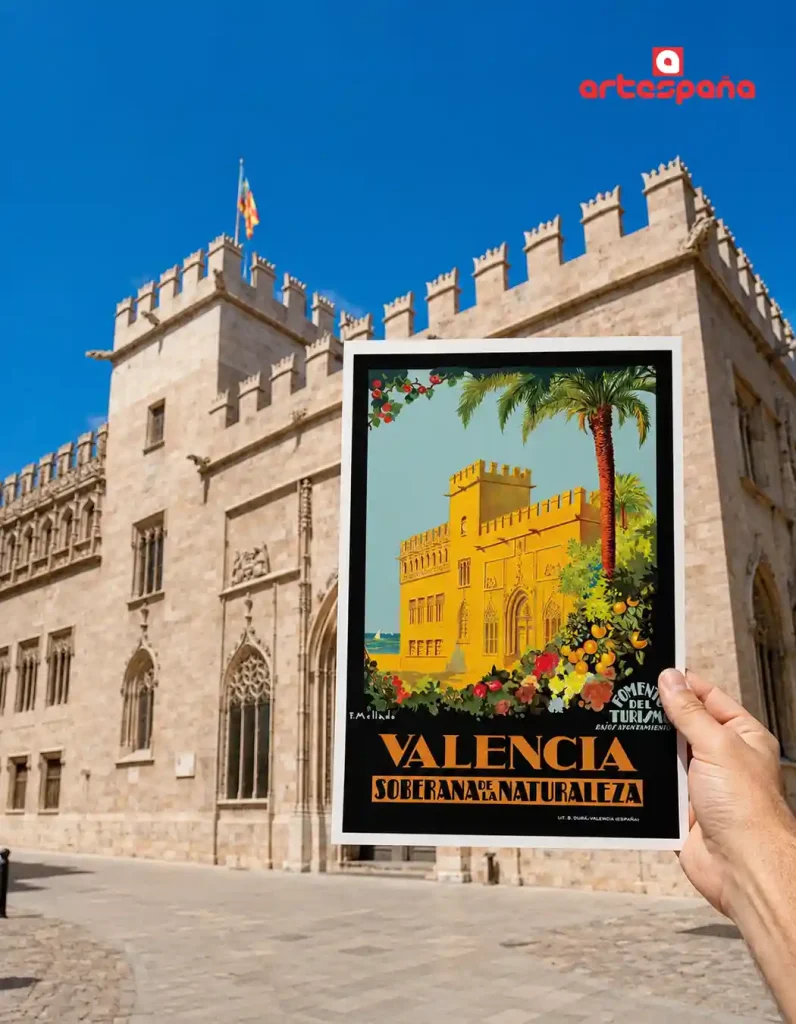
With its crenellated towers, richly decorated stonework and imposing Gothic architecture, it is one of the city’s most recognisable landmarks. Today, it is a UNESCO World Heritage Site and one of the finest examples of late Gothic civil architecture in Europe. But when it was built, this was not a museum or a monument.
It was a workplace.
And business could be serious.
A building designed for a city at the height of its commercial power
The Lonja emerged during a period when Valencia was becoming one of the Mediterranean’s great commercial centres. The city was deeply involved in international trade, and silk was one of its most important industries.
The building we see today began to take shape in the late 15th century, under the direction of the architect and master builder Pere Compte. UNESCO describes the complex as an exceptionally well-preserved example of late Gothic architecture and a testament to the importance of Iberian merchants in Mediterranean commerce.
The famous Sala de Contratación, or Contracting Hall, was at the heart of this commercial world. Its enormous interior, with its famous twisted columns and high vaulted ceiling, was designed to impress.
And that was probably the point. This was architecture as a statement of confidence. Valencia was effectively saying: we are wealthy, we are powerful, and we take commerce seriously.
The building was a physical advertisement for the city’s commercial ambitions long before anyone had invented advertising.
But here is the part many visitors don’t know
The Lonja de la Seda Valencia wasn’t just about silk. And it certainly wasn’t just about making money. It was also about trust.
Imagine arriving in Valencia hundreds of years ago to conduct business. There were no modern banks, no online contracts, no credit-rating agencies and certainly no email trail to prove that someone had promised to pay you next Tuesday.
International commerce depended heavily on reputation, contracts and systems of justice. The Lonja was part of that system.
The complex included the Consulate of the Sea, an institution dealing with commercial matters and maritime trade. The Lonja became a place where business could be conducted and commercial disputes could be handled.
In other words, this magnificent Gothic building was something rather like a medieval combination of stock exchange, trading floor, commercial court and business centre. Not bad for a building that is more than five centuries old.
And then there was the prison
Here is where the story becomes considerably more interesting. The central tower of the Lonja had another function.
It contained a prison for merchants who had been declared bankrupt or were unable to meet their financial obligations. The Valencia city government describes the tower as having originally served as a prison for merchants who could not pay their debts.
So, in a strange twist, the Lonja de la Seda Valencia represented both sides of the commercial dream.
Make the right deal, and you could become wealthy.
Make the wrong one, and you might end up in the tower.
It is difficult to imagine a more direct reminder that medieval business was not for the financially faint-hearted.
The building’s magnificent architecture therefore takes on a different meaning when you know its history. The elegant columns and imposing walls were not simply decorative. They belonged to a world in which commerce was taken extremely seriously—and where the consequences of financial failure could be considerably more severe than receiving an unpleasant email from your bank.
Why is it called the Silk Exchange?
The name comes from Valencia’s historic silk industry, which became hugely important to the city’s economy.
From the 14th century onwards, Valencia developed strong connections with silk production and trade. The neighbourhood of Velluters became particularly associated with silk workers and workshops, and the industry helped bring considerable wealth to the city. The regional tourism authority notes that the city was home to thousands of silk workshops during the industry’s centuries of importance.
Yet the Lonja de la Seda Valencia was never simply a building for silk.
Merchants traded in many different goods, and the building formed part of a much broader commercial network linking Valencia with the Mediterranean and beyond.
That is why the Lonja is so fascinating. Its name makes you think of silk. Its architecture makes you think of castles. Its history makes you think of banks, courts and business.
And its prison reminds you that, in the world of medieval commerce, success and disaster could sometimes be separated by a very thin line.
Look up next time you visit
The next time you stand outside the Lonja de la Seda Valencia, don’t just admire the crenellated walls. Look carefully.
The building is filled with details, sculptures and decorative figures, some of which are surprisingly strange and sometimes downright grotesque. The Gothic imagination was not always as polite as the grand architecture might suggest.
Inside, the famous spiral columns of the Contracting Hall create the impression of a stone forest, with the columns rising upwards into the vaulted ceiling.
It is one of those spaces where the architecture tells you something about the people who built it. These were merchants who wanted to be taken seriously. They were operating in an increasingly international world. They needed rules. They needed trust.
And they wanted everyone who entered the building to understand that Valencia was a city that mattered.
More than five centuries later, the message has survived.
From commercial powerhouse to cultural icon
The Lonja de la Seda Valencia was declared a National Historic-Artistic Monument in 1931 and became a UNESCO World Heritage Site in 1996. UNESCO considers it an outstanding example of late Gothic secular architecture and a remarkable witness to the commercial importance of Mediterranean merchants in the 15th and 16th centuries.
Today, visitors photograph its towers, admire its architecture and wander through its historic spaces. But perhaps the most interesting way to look at the Lonja is to remember what it once represented.
This was a building where people came to do business. They came to negotiate. They came to make deals. They came to trust one another. And, occasionally, when things went badly, they came to discover that the consequences of a failed business venture could be remarkably concrete.
A prison cell, in fact. That makes the Lonja de la Seda more than a beautiful monument.
It is a stone portrait of Valencia at the height of its commercial ambition—a place where architecture, money, silk, law and human ambition all came together under one spectacular Gothic roof. And perhaps that is why the building still feels so alive today. The merchants have gone. The silk trade has changed. The contracts are long forgotten. But Lonja de la Seda Valencia remains.
And if you look closely, you can still see the story.
© Lonja de la Seda Valencia: The Silk Exchange’s Surprising History – Artespana.es
Get some more Lonja de la Seda Valencia