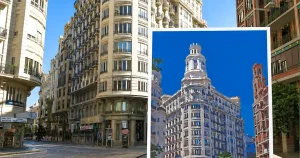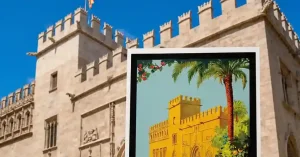
Uncover the history and structural genius of Mercado Central Valencia, one of Spain’s most significant “Bien de Interés Cultural” landmarks, a testament to Valencia’s enduring spirit.
The Mercado Central Valencia stands as a monumental fusion of art and utility, a structure that historians have long described as a “cathedral of trade.” Located in the historic center of Valencia, a city founded by the Romans in 138 B.C., the market occupies a site that has been a center of commerce for over a millennium.
Long before the current iron and glass structure existed, the area served as a bustling zoco during the Muslim occupation, with vendors setting up their stalls near the ancient city walls. Today, the Mercado Central Valencia is part of a “golden triangle” of architecture, sitting alongside the gothic Lonja de la Seda—a UNESCO World Heritage site—and the historic Church of the Santos Juanes.
The road to creating this architectural icon was long and complex. Following the demolition of over forty houses to clear the irregular site, a public competition was held in 1910 to design a market that would reflect the city’s economic progress and the power of its agricultural industry.
The winning architects, Francisco Guardia Vial and Alejandro Soler March, were graduates of the School of Architecture of Barcelona and had worked under Luis Domènech i Montaner, a key figure in the modernist movement. The first stone was laid in 1910 in a ceremony led by King Alfonso XIII, who symbolically began the demolition of the old market area with a silver pickaxe.
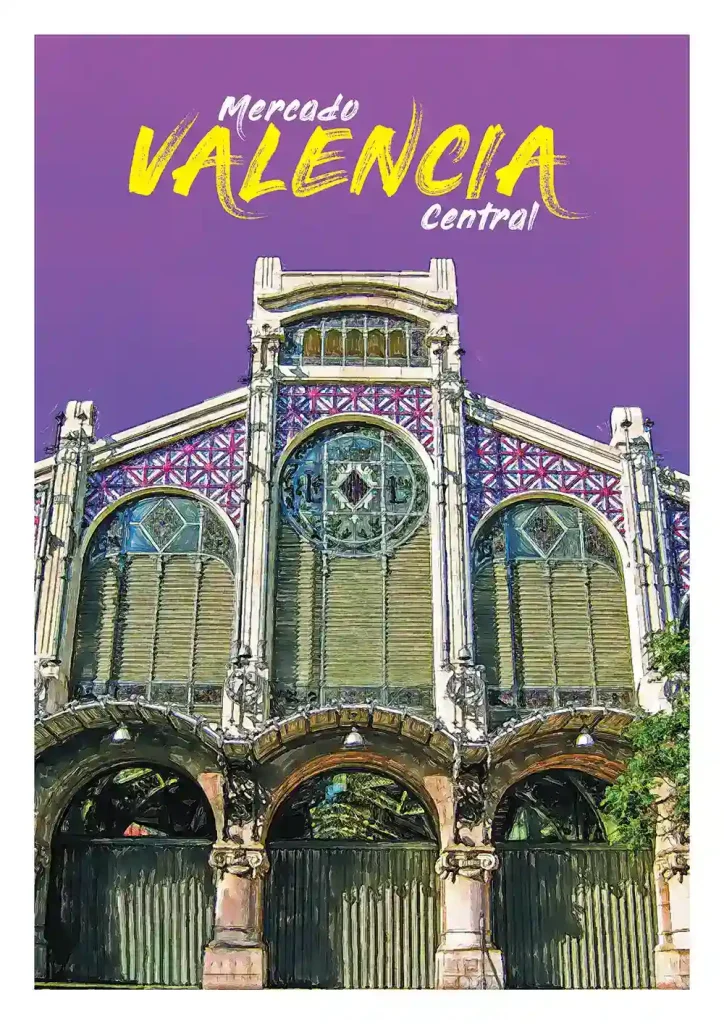
Structurally, the Mercado Central Valencia is a masterpiece of the “Valencian Modernism” style, which utilizes brick, stone, iron, and glass to create light-filled, airy spaces. The building covers approximately 8,000 square meters and is organized around a rationalist layout of straight streets.
Its most defining feature is the central dome, which soars to a height of 30 meters and is decorated with ceramic tiles and glass that allow natural light to flood the interior stalls. Interestingly, the market’s architecture has often been compared to the Dong Xuan Market in Hanoi, Vietnam, which also features 19th-century European architectural influences and five distinct arches.
One cannot discuss the Mercado Central Valencia without mentioning its famous weather vanes. The central dome is topped by the “Cotorra del Mercat” (the Market Parrot), a green bird that symbolizes the lively chatter and gossip of the market below.
According to local legend, this parrot engages in a perpetual silent dialogue with the “Pardal de Sant Joan” (the sparrow) on the neighboring church, representing the eternal contrast between the earthly, everyday world and the transcendental, divine realm. These figures are so ingrained in local culture that they frequently appear in Valencian literature and theater.
Beneath the beauty of its tiles and glass, the area surrounding the Mercado Central Valencia also holds darker historical significance. The Plaza del Mercado was once the site of public executions, including that of Gaietà Ripoll in 1826, the last person executed by the Spanish Inquisition for heresy.
It was also the site of the execution of Margarida Borràs in 1460, who is remembered today as a significant figure in transgender history. Even the market’s basement has its own urban myths, including the long-standing legend of a crocodile that supposedly roams the subfloor once the lights go out and the crowds vanish.
In modern times, the market has undergone significant renovations, most notably a full structural restoration completed around 2010. These updates have preserved its status as a “living market” while adding high-tech amenities. The market features 13 different entrances, with the most prominent being the gates at Plaza del Mercado, Plaza de Brujas, and Avenida del Oeste.
Inside, the 259 stalls are meticulously organized, offering everything from fresh seafood and salted fish to traditional ceramics and jewelry. The use of traditional azulejos and stained glass throughout the building ensures that it remains as beautiful as it is functional.
Visitors are encouraged to respect the market as a place of work for thousands of locals. Guidelines for a responsible visit include not sitting on the access stairs, avoiding the obstruction of aisles for photos, and asking vendors for permission before taking pictures of their produce.
Whether you are visiting to admire the ironwork, study the “novecentista” style of the administrative buildings, or simply soak in the history of the “Huerta” represented in the ceramic decorations, the Mercado Central Valencia remains an essential monument to the city’s past and present.
Essential FAQs: Mercado Central Valencia
Does the Mercado Central Valencia host events? Yes, it is a dynamic space that frequently hosts cultural events, tastings, and workshops, especially during holidays
What architectural style is the Mercado Central Valencia? It is a prime example of Valencian Modernism, characterized by the use of iron, glass, ceramics, and ornamental brickwork.
When was the Mercado Central Valencia built? Construction began in 1914 and the building was officially inaugurated on January 23, 1928.
What are the main entrances to the Mercado Central Valencia? The main gates are located at Plaza del Mercado, Plaza de Brujas, and Avenida del Oeste, though there are 13 doors in total.
Is the Mercado Central Valencia close to other monuments? Yes, it is part of a historic triangle alongside the Lonja de la Seda and the Church of Santos Juanes.
What is the “Cotorra del Mercat”? It is a parrot-shaped weather vane on the main dome, symbolizing the bustle and chatter of the vendors.
Can I shop online from Mercado Central Valencia? Yes, the market offers home delivery services and online shopping through its official website and email.
Is there a weight-check service in the market? Yes, there is a free “servicio de repeso” available to ensure all customers are satisfied with their purchases.
Who is the most famous chef associated with the market? Ricard Camarena, who holds a Michelin star, runs the famous Central Bar located inside the market.
What are the typical snacks found at Mercado Central Valencia? Visitors often enjoy horchata with fartons or “longaniza de Pascua,” a local cured sausage.
© The Architectural Soul of the Mercado Central Valencia – Artespana.es
Get some more Articles like Mercado Central Valencia